Professor Ilana Umansky’s research helped inform California’s overhaul of its 50-year-old English learner reclassification policy. Research conducted with QRME PhD student Havisha Khurana contributed to the development of AB 2555, which was unanimously passed by the Legislature and signed into law.
This month, The Center for Childhood Safety and Well-being (CSAW) proudly celebrates Senior Research Assistant Simone Piper’s 10-year anniversary, recognizing a decade of leadership, scholarship, and unwavering commitment to preventing child abuse and maltreatment.
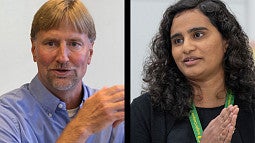
Two University of Oregon faculty have been recognized for their efforts by Oregon Health & Science University’s (OHSU) Medical Research Foundation of Oregon. John Seeley, the Castle-McIntosh-Knight Professor of Education and executive director of the HEDCO Institute for Evidence-Based Educational Practice is one of the award recipients who will receive the Discovery Award.
Professor Emeritus Rob Horner, PhD, whose groundbreaking work has helped schools nationwide implement proactive systems that promote positive behavior, strengthen school climate, and support student success, was inducted into the Multi-Tiered System of Supports (MTSS) Hall of Fame at the Global MTSS Summit on July 31, 2026.
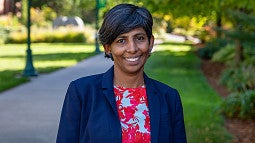
Petrone Professor Maithreyi Gopalan, associate professor and researcher at UO says the 2023-24 collection introduced several new pieces of information. Gopalan, like other researchers NPR heard from, said she and a team of other researchers hope to publish a deeper analysis of the data on their website in the coming days.
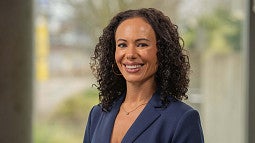
Rhonda Nese, PhD, associate professor in the College of Education, Department of Special Education and Clinical Sciences, has been appointed to the Oregon Department of Education’s Substance Use Prevention Advisory Group.
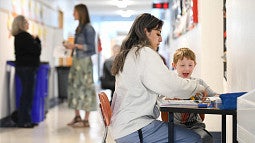
UO report analyzed over 100 studies of children in preschool through first grade. Targeted help with math in students’ earliest years can lead to higher achievement, according to a report by the University of Oregon HEDCO Institute for Evidence-Based Educational Practice.
Reading for enjoyment in childhood helps build lifelong readers and supports academic success. However, research shows children are spending less time reading outside of school. Literary experts Gina Biancarosa and Audrey Lucero share tips to help inspire children to read for fun.
The Oregon Journalism Project’s “F” rating of most Oregon teacher preparation programs creates a compelling headline but overlooks the complexities of educator preparation and the factors that influence student reading outcomes. Dean Emily Tanner-Smith contributed expertise and insight.
Professor Emeritus Hill Walker, PhD, a pioneering scholar, educator, and leader whose work has shaped the fields of special education, school mental health, and positive behavioral supports for decades, was inducted into the MTSS Hall of Fame at the Global MTSS Summit on July 31, 2026.