
The communication disorders and sciences (CDS) bachelor’s degree is considered a pre-professional degree.
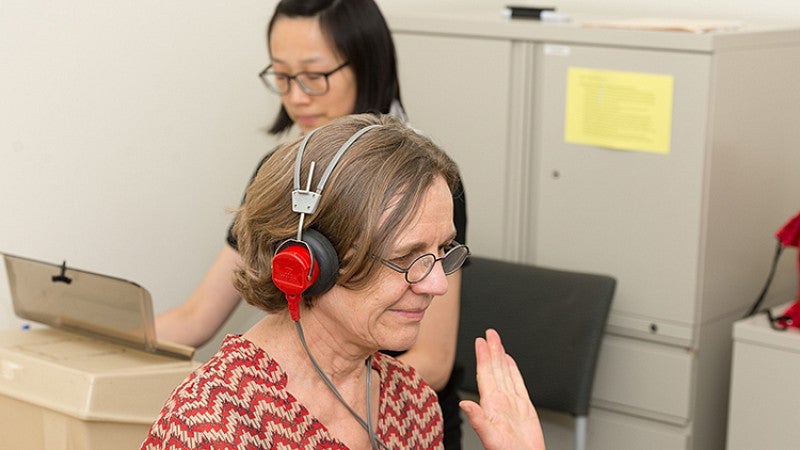
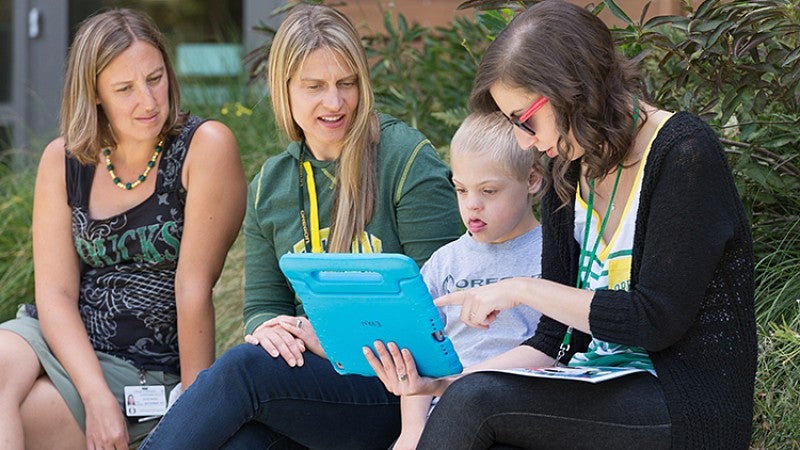
You will have the foundation to pursue graduate studies that will lead to a career as an audiologist or speech pathologist.
We will provide you with:
- prerequisite course work for graduate work in speech language pathology and audiology
- scientific and theoretical frameworks for understanding human communication and communication disorders
- perspectives on communication disorders across the lifespan
With a graduate degree, you can then work with individuals of all ages who are challenged by communication disorders from diverse cultural, linguistic, social, and economic backgrounds.
If you want to pursue graduate work in audiology, you may need to take additional courses in the sciences. You can also take a position in an allied field.
What makes our Communication Disorders and Sciences program special?
The cohort model By the time our undergraduates reach their junior year, the cohort has formed. Most of our CDs majors are headed toward careers in speech pathology, with a small number headed toward audiology. Our students progress through the program plan together for the next two years, forming a cohesive learning community. Transfer students coming in junior year quickly find friends and study partners in the major.
The classroom and beyond Students learn from specialists across the fields of speech pathology and audiology, many of them working concurrently in research or clinical settings. Beyond the classroom, students engage in a wide range of applied experiences. They may gain clinical experience as a practicum assistant in the HEDCO Clinic or in the local schools, or volunteer at one of Lane County’s many agencies serving children and families.
Research opportunities Undergraduate students participate in a number of our faculty’s research labs including, O-SEE and EDLD labs. Some students also partner with faculty in linguistics, psychology, and other departments for research opportunities, and Clark Honors College students majoring in CDS find mentors and thesis opportunities through these experiences.


Your Guide to the Communication Disorders and Sciences (CDS) Major
Check out this episode of the College of Education's Look No Feather podcast, where Dr. Samantha Shune, Associate Professor, Interim Program Director for Communication Disorders and Sciences (CDS) as a whole and Director of Undergraduate Studies for CDS, talks about the major and career paths in speech-language pathology and audiology. Dr. Shune shares her journey into the field, explains the CDS 4+1 program, and discusses how the major prepares students for graduate school. We also explore observation hours, career opportunities with or without a graduate degree, and tips for choosing a minor or second major and gaining extracurricular experience to help students reach their academic and career goals.
Transcripts for podcast episodes can be accessed through Apple Podcasts. Please make sure you are signed in to the Apple Podcasts app on your Apple phone or desktop before attempting to view a transcript. Alternate transcript format available upon request for Android and Windows users (email: coesas@uoregon.edu).
CDS Undergraduate Program Grading Philosophy
The CDS major is a rigorous, pre-professional major which leads to advanced study in speech-language pathology, audiology, and related fields. With that in mind, CDS faculty members work to ensure students gain the scientific, theoretical, and applied clinical knowledge to prepare them for future careers. Grades in the courses serve as one metric to allow graduate programs and employers to evaluate CDS graduates.