
From Learning to Leadership: FHS Alumna Leah Schluter’s Path to Prevention and Child Wellbeing
The University of Oregon College of Education (COE) has long emphasized the power of applied learning, community engagement, and reflective practice. For Leah Schluter, a 2016 graduate of the Family and Human Services (FHS) program, those values became the foundation of a career dedicated to violence prevention, child safety, and systems‑level change. What began as curiosity and exploration during undergraduate coursework evolved into a professional role centered on collaboration, advocacy, and wellbeing across Oregon.
"Throughout undergrad I was unsure of what my niche would be or where I wanted to go with my career. Now I see how every role I have had is interconnected and how they have shaped me into the professional I am today". –Leah Schluter
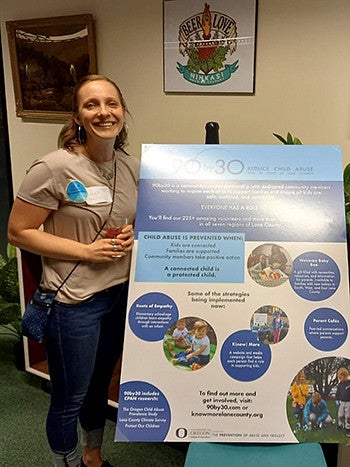
Currently, Leah serves as the Prevention Education and Advocacy Coordinator within the Center for Childhood Safety and Wellbeing at the University of Oregon. In this role, she supports youth engagement in child abuse prevention and wellbeing efforts, coordinates coalition work across Lane County, and acts as a liaison for statewide initiatives focused on child and family wellbeing. The position reflects both a return to the institution that shaped her academic identity and a continuation of the values first cultivated there.
As an undergraduate in the FHS program, Leah’s trajectory was anything but linear. Rather than following a single predetermined path, she embraced opportunities to explore multiple professional directions through hands‑on learning. “When I was in the Family and Human Services program, I had the opportunity to participate in four distinct internships,” Leah explained. Those experiences provided more than résumé lines; they offered clarity. The internships allowed her to identify the type of work that felt meaningful while also providing a competitive advantage when entering the workforce after graduation.
The academic experience was equally formative. One course left a lasting impression by challenging assumptions and illuminating the complexities of public service. The class focused on the intersection of politics and human services and included a memorable project that required students to attempt to balance the federal government’s budget. Leah recalled that the exercise was both humbling and eye‑opening, as it “forced me to recognize all the competing priorities that exist in government budgets and how they impact the human services sector.” That moment helped solidify her understanding that prevention and wellbeing work does not exist in isolation but is deeply shaped by policy, funding, and political decision‑making.
Beyond coursework, mentorship played a critical role in sustaining balance and momentum. Through internships connected to the FHS program, Leah developed relationships with mentors from her internships who continued to offer guidance well beyond graduation. These mentors provided practical advice on juggling academics, professional responsibilities, and personal life, reinforcing the idea that success in human services requires both skill and sustainability.
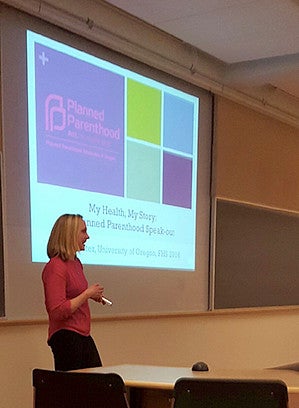
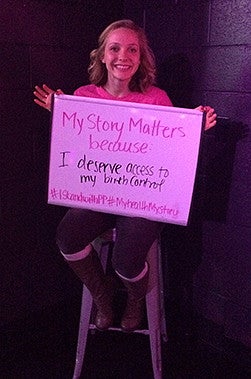
A defining moment of belonging came during Leah’s senior year, when she coordinated a speak‑out event for Planned Parenthood as part of her capstone project. The turnout exceeded expectations, drawing classmates, faculty, and members of the broader university community. Seeing that level of support affirmed Leah’s sense of place within the College of Education and the university, creating what she described as “such a great sense of community.” That experience also foreshadowed the collaborative, community‑centered work that would later define her career.
Physical spaces on campus also shaped Leah’s undergraduate experience. She frequently studied in Knight Library, a place she now returns to in a different capacity. As a university professional, she has enjoyed meeting with students there, bridging past and present roles. The HEDCO Learning Commons also served as an essential resource, offering access to printing, technology support, materials, and collaborative workspaces—practical supports that made academic success more attainable.
Looking back, Leah recognizes that the College of Education provided not just knowledge, but opportunity. “You get out of higher education what you put in,” she reflected, noting the breadth of resources and expertise available through the COE. At the time, it was not always clear how each experience fit together. In hindsight, however, the connections are undeniable. Internships, coursework, and advocacy projects collectively shaped her professional identity rooted in violence prevention and family wellbeing. An internship with Planned Parenthood Advocates of Oregon during her senior year, for example, directly enabled post‑graduation work in community organizing.
That perspective informs the advice Leah would offer her younger self. She would emphasize trust in the process and in one’s own developing sense of purpose. During her undergraduate years, uncertainty about a specific niche felt unsettling. Now, each role is understood as interconnected, contributing to the skills and insight required for the work she does today.
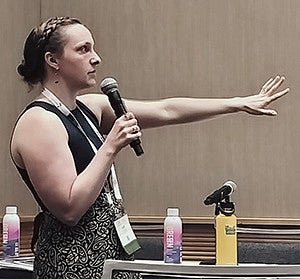
That work continues to evolve. One of the most affirming aspects of Leah’s current role has been her involvement with the Lane County Violence Prevention Coalition. Through meetings with diverse community partners, she has observed how organizations across the human services sector often face similar challenges in isolation. The opportunity to convene, collaborate, and work toward shared goals has been deeply fulfilling. Being part of an effort that brings community together around child and family wellbeing reinforces both the purpose and potential of prevention‑focused work.
Looking ahead, Leah hopes to remain engaged in violence prevention and family wellbeing efforts while expanding her impact beyond Oregon. While her current focus is local and statewide, she aspires to contribute to national conversations about prevention and systemic change. Central to that goal is building stronger statewide connections and developing a deeper understanding of legislative decisions' impacts on child and family wellbeing efforts at the community level. Ultimately, Leah hopes her work will help foster systems change that allows prevention efforts to operate more collaboratively and effectively across Oregon. This ambition is rooted firmly in the values first cultivated at the University of Oregon College of Education.