
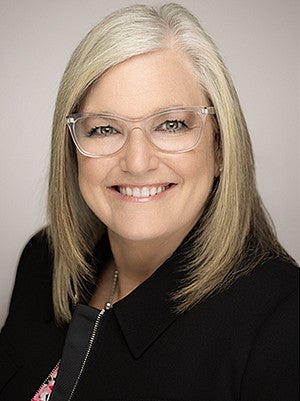
Rigor, Compassion, and the Art of Designing Equity: Elementary and Special Education alumna Kate Barker
“The COE taught me that higher education is not just about earning a degree; it is about developing the habits of reflection, persistence, and continuous learning.” —Kate Barker
Meet Elementary and Special Education alumna Kate Barker, BS '91 Elementary Education, MS '92 Special Education, a veteran principal, professor, author, speaker, and leadership coach. In reflecting on her decades‑long career in education, Kate returns to a moment early in her professional journey that affirmed not only her path but her purpose. She recalled realizing that her training in special education would remain central to her work, regardless of her role. “I realized that my training in special education wasn’t something I would ever ‘leave behind,’ even though I never formally taught in a special education classroom,” she explained. The core practices she learned, differentiation, maintaining high expectations while allowing for flexibility, and collaborating deeply with families, were woven into her daily work as a teacher, district office leader, and later as a principal. Watching students who had once struggled begin to flourish reinforced her belief that “equity‑driven, inclusive systems truly change lives.”
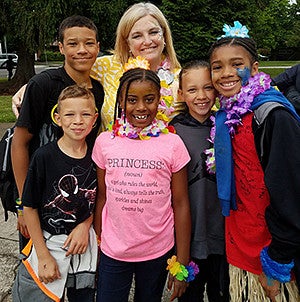
When Kate spoke about those who shaped her thinking, she returned immediately to the professors at the College of Education (COE) whose blend of rigor and care became a model for her own leadership. “The COE faculty held incredibly high expectations while also modeling deep care for students,” she said. What stayed with her most was not just the content they shared, but how they taught her to think about learners, the whole child, their humanity, and their potential. “I learned that rigor and compassion are not opposites; they are partners,” a philosophy that would come to define her leadership approach.
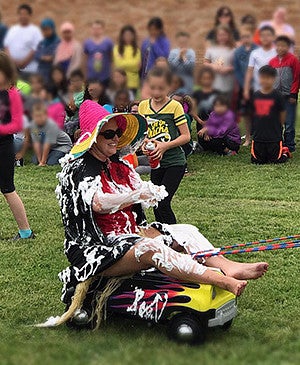
Her coursework in both elementary and special education offered more than strategies; they provided a framework. It taught her to view learners through a strengths‑based lens and to see inclusion as a mindset rather than a placement. “That foundation influenced every role I’ve held since,” she said, noting its impact on her work as a classroom teacher, district leader, principal, and now professor. Her time at the University of Oregon also expanded her understanding of higher education itself. “The COE taught me that higher education is not just about earning a degree; it is about developing the habits of reflection, persistence, and continuous learning,” a perspective she now shares with aspiring administrators.
Kate emphasized how relationships and peer support shaped her experience as a graduate student. Studying alongside peers who were equally committed, and at times overwhelmed, created a sense of shared purpose. “Informal study groups, conversations between classes, and encouragement from faculty made the work feel manageable and meaningful,” she reflected. Two roommates in the same program ensured that she always had a thought partner nearby.
When asked about a moment that reinforced her choice to become an educator, Kate described an unexpected turning point. The first time she applied to the College of Education, she was not accepted. Sitting on a bench near the law center, she watched a school bus drive by and felt deeply discouraged. Yet the disappointment clarified her resolve. “When I was admitted the following term, it felt earned, and I knew I belonged,” she said. For her, belonging came through persistence, a consistent theme in her story. That same persistence is the advice she would have offered her younger self: “Setbacks are not signals to stop; they are opportunities to strengthen your path. Optimal growth often comes when you are the most uncomfortable. ”
If she returned to campus today, Kate said she would visit the areas around the COE buildings, spaces that she feels symbolize growth, resilience, and the beginning of a career grounded in service. What she valued most about the College of Education, however, was never the space itself but the people. She found faculty who were invested and accessible, and classmates who challenged and expanded her thinking, which all formed the community that remains most meaningful.
Her experience as a COE student profoundly shaped her understanding of leadership, emphasizing the interconnectedness of systems and relationships. “Meaningful change happens when educators commit to equity, reflect on their practice, and work collaboratively,” she explained. These beliefs guided her 30‑year career in the David Douglas School District and continue to inform her work today as a professor and leadership coach. Being both a long‑time practitioner and a professor allows her to bridge theory and the complexities of real schools. “Leadership decisions are rarely clean or theoretical; they are shaped by urgency, relationships, and competing needs,” she said.
Over time, Kate has consistently seen that optimal achievement happens when high expectations are intentionally woven together with strong relationships. Early in her career, she may not have articulated it that clearly, but she sensed that connection mattered. She came to understand that relationships alone are not enough. High expectations must be explicit, consistent, and supported by intentional systems. Equity does not emerge simply from good intentions. It requires deliberate structures, clear accountability, and thoughtful design. Inclusion is not accidental. It must be planned, monitored, and continuously strengthened.

This realization deepened her commitment to multi-tiered systems of support, inclusive practices, and data-informed decision making. She learned that if leaders truly believe every student can achieve at high levels, then systems must reflect that belief. Equity work remains ongoing and humbling, calling for continuous reflection, a willingness to examine assumptions, and the courage to align practices with values.
When asked what she wants current COE students to know about leading in today’s schools, Kate explained that modern leadership requires a blend of courage and relational skill. Leaders must hold high expectations, design clear systems, and maintain deep commitment to historically underserved students and families. “Leadership is not about having all the answers; it is about building collective capacity, listening deeply, and staying anchored to purpose during times of change,” she said.
Her current work reflects the values she first developed at the University of Oregon: persistence, reflection, and inclusive practice. Whether teaching graduate students, coaching principals across the West Coast, or presenting nationally, Kate remains focused on supporting educators in creating schools where all students belong and thrive. Her decades in the David Douglas community, serving multilingual and high‑poverty populations, shaped her leadership philosophy to be grounded in listening, cultural humility, and partnership with families. These experiences continue to guide her equity‑driven approach.
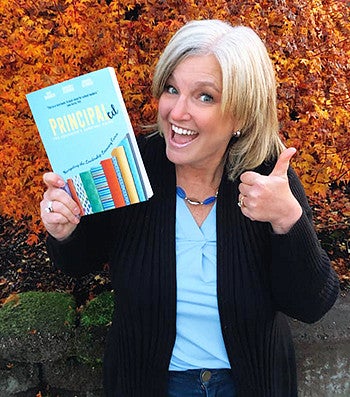
Beyond her local community, Kate has committed to statewide and national leadership through organizations such as COSA and NAESP. She has facilitated principal academies, moderated statewide learning communities, advocated for education policy in Washington, D.C., and co‑authored Principaled: Navigating the Leadership Learning Curve, an experience she described as “a thrill to publish.”
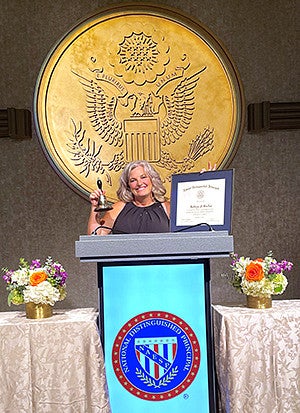
When reflecting on the greatest honors of her career, Kate pointed to her recognitions as Oregon’s Principal of the Year and as a National Distinguished Principal. For her, these were not personal milestones but community acknowledgments. “These recognitions affirmed the collective work of students, staff, and families in the communities I served,” she said. “They were acknowledgments of what is possible when schools commit to equity, inclusion, and shared leadership.”
As she looks toward the future, Kate aims to continue supporting educators at all stages of their careers, especially those working in complex, diverse contexts. Whether through teaching, coaching, or writing, she hopes to help leaders build schools “where rigor, joy, and belonging coexist.” Her commitment to reflective practice, inclusive systems, and human‑centered leadership remains a steady theme, a legacy grounded in the values she first cultivated at the University of Oregon and carried into every chapter of her career.