
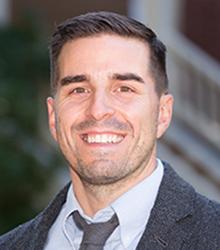
Joseph Nese
Biography
Joe Nese is a Research Professor at Behavioral Research and Teaching (BRT) at the University of Oregon. After receiving his PhD in school psychology from the University of Maryland in 2009, he was an Institute of Education Sciences postdoctoral research fellow.
Joe has served as PI or Co-PI on federally funded research grants totaling over $9 million, including the development and validation of a new computerized assessment system of oral reading fluency – CORE – Computerized Oral Reading Evaluation (R305A140203, R305A200018, R305D200038), and the development of an instructional alternative to out-of-school suspension – ISLA – the Inclusive Skill-building Learning Approach (R305A180006, 1R01DA059401-01).
His work to date is based on integrated collaborations with experts in reading, teaching, student exceptionalities, psychometrics, statistics, computer science, behavioral outcomes, exclusionary discipline, and positive behavioral interventions & supports to advance the systems used by educators to support data-based decision making and improve student outcomes. His goal is to bridge assessment and intervention in a meaningful way; to provide access to reliable and relevant data, interpret student responsiveness to intervention, and offer instructional recommendations to teachers to increase student achievement.
A growing part of his research and scholarship efforts is the application of the R programming language and environment, which embodies his commitment to open science, reproducible research, efficient workflow, communication of findings, and access to advanced practices.
He has also provided opportunities and training to support graduate students, including peer-reviewed publications and presentations, study design, research methods, data preparation, statistical analyses, and pursuit of their individual scholarly interests.
Education
PhD, 2009, University of Maryland, College Park
School Psychology
BA, 2002, University of California, Santa Barbara
Major: Psychology Minor: English
Publications
Nese, J. F. T. (2022). Comparing the growth and predictive performance of a traditional oral reading fluency measure with an experimental novel measure. AERA Open, 8, 1-19. doi: 10.1177/23328584211071112
Nese, J. F. T., & Kamata, A. (2021). Evidence for automated scoring and shorter passages of CBM-R in early elementary school. School Psychology, 36, 47-59.
Nese, J. F. T., & Kamata, A. (2021). Addressing the large standard error of traditional CBM-R: Estimating the conditional standard error of a model-based estimate of CBM-R. Assessment for Effective Intervention, 47, 53-58.
Nese, R. N. T., Nese, J. F. T., McCroskey, C., Meng, P., Triplett, D., & Bastable, E. (2021). Moving away from disproportionate exclusionary discipline: Developing and utilizing a continuum of preventative and instructional supports. Preventing School Failure: Alternative Education for Children and Youth, 65, 301-311. doi: doi.org/10.1080/1045988X.2021.1937019
Schulte, A. C., Stevens, J. J., Elliott, S. N., Tindal, G., & Nese, J. F. T. (2016). Achievement gaps for students with disabilities: Stable, widening, or narrowing on a state-wide reading comprehension test? Journal of Educational Psychology, 108, 925-942. doi: 10.1037/edu0000107
Nese, R. N. T., McIntosh, K., Nese, J. F. T., *Ghemraoui, A., Bloom, J., Johnson, N. W., Phillips, D., Richter, M. F., & Hoselton, R. (2016). Predicting abandonment of school-wide positive behavioral interventions and supports. Behavioral Disorders, 42, 261-270.
Nese, J. F. T., Park, B. J., Alonzo, J., & Tindal, G. (2011). Applied curriculum-based measurement as a predictor of high-stakes assessment: Implications for researchers and teachers. The Elementary School Journal, 111, 608-624. doi: 10.1086/659034