
The Scholarship Factor: When Support Tips the Equation Towards Opportunity
When does a prospective student know it is the right time to return to the classroom, pursue a long‑held goal, or accelerate a professional trajectory?
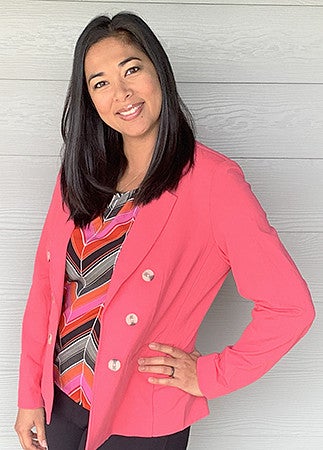
For Lilia Andrew, a lifelong mathematician from Lowell, Oregon, the decision to become a school administrator was reached the way she approaches any complex problem: by weighing the variables. Could she balance work, family, coursework, and fieldwork? Could she justify the financial investment now rather than later? The numbers only worked when the University of Oregon College of Education (COE) Principal Licensure program recognized her potential and offered a donor‑funded recruitment scholarship. With that support in place, the path forward became not just possible, but purposeful.
“My favorite part of the principal licensure program has been the reflective growth it has sparked in me, even without holding a formal leadership position yet.” —Lilia Andrew
The COE aligned with Lilia's values and vision for leadership. As she explains, “I chose the College of Education because of its strong reputation for equity‑focused leadership and practical training. I had already been attending Coalition of Oregon School Administrators (COSA) conferences and became familiar with the COE program through those experiences. It was clear this was the right place to grow as a school leader.”
Lilia’s professional foundations are rooted in mathematics, problem solving, and real‑world systems thinking. She began as a mathematics educator, developing a deep understanding of instruction, curriculum, and student learning. Over time, she expanded into education sales, real estate, and business, gaining firsthand experience in operations, communication, and relationship building. This blend of quantitative insight, teaching experience, and business perspective gives her a leadership approach that is analytical, people centered, and grounded in both educational practice and practical decision making. It is the kind of balanced equation the College of Education felt confident investing in.
Now halfway through the first year of the rigorous two‑year Principal Licensure program, which includes a yearlong internship and mostly online coursework, her academic experience has been as reflective as it is demanding. “My favorite part of the principal licensure program has been the reflective growth it has sparked in me, even without holding a formal leadership position yet,” she says. “The coursework and discussions have challenged me to see myself as a leader, clarify my values, and prepare intentionally for future opportunities to positively impact schools and communities.”
Lilia’s leadership perspective is grounded in equity, community, and a commitment to student success and well‑being. “I am passionate about creating equitable, inclusive school environments where every student feels valued and supported,” she notes. “I believe in empowering educators, building strong community partnerships, and fostering leadership that drives meaningful change.” Her diverse background enhances this work with creativity, flexibility, and a systems‑thinking mindset. These experiences shape her vision of school leadership as a role centered on cultivating student success, strengthening educator practice, and ensuring that every learner has the opportunity to thrive. This outcome, she says, happens when you keep students at the center of every calculation.
Lilia received a donor-funded recruitment scholarship from Educational Leadership, Administrator Licensure and Degree Program utilizing funds from the general College of Education Scholarship Fund. Student scholarships can make all the difference, particularly for students in need. Ten percent of COE students receive scholarships thanks to the support of our generous donors – but we can do more. With your gift, we can help all students afford college, bridge gaps in equity, and send more diverse practitioners, educators, and researchers out into the field.