
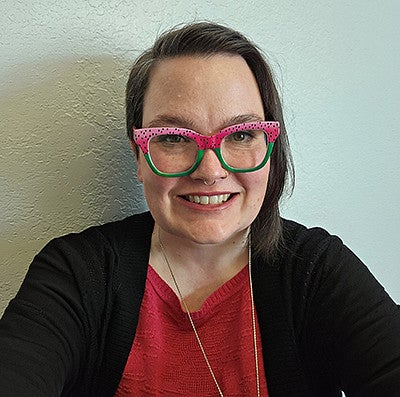
Guided by Purpose: How Alum Mary Troffaes (FHS, ’10) Turned Community, Resilience, and Systems Thinking into a Career Serving Youth
“FHS gave me purpose when I needed it most. Even through personal struggles and self-doubt, I never gave up, and neither did the program. The education, support, and community I found at UO helped me build a life I am proud of and inspired me to give back to future students.” —Mary Troffaes, LMFT, CADC-I
For Alum Mary Troffaes, LMFT, CADC-I, the path to a career in mental health began not with a detailed professional plan, but with a desire to make a difference in the lives of young people. Since graduating from the University of Oregon College of Education's Family and Human Services (FHS) program in 2010 with a Bachelor of Arts degree, Troffaes has built a career dedicated to supporting youth, families, and the professionals who serve them. Today, she serves as Outpatient Program Manager for the Northern Region at Kairos, where she continues to advocate for accessible, community-centered mental health services.
Troffaes's journey to the College of Education was shaped by experiences that helped her discover a sense of purpose. Before entering the FHS program, she volunteered as a mentor through YoungLife, worked in local middle schools, and spent summers at youth camps. Those experiences sparked an interest in youth development, but it was a particular class at the University of Oregon that changed the direction of her future.
"I then spent my summers volunteering at youth summer camps and in the local middle schools during the school year," she said. "This led me directly to taking a class by Dan Close where he discussed his work in Ukrainian orphanages. Hearing him speak about his work and the impact it had was life-changing for me."
At the time, Troffaes was considering transferring to Oregon State University to study biochemical engineering. Instead, after conversations with faculty and staff and completing the FHS application process, she chose to remain at the University of Oregon. The decision would shape the trajectory of her life and career.
During her time in FHS, Troffaes embraced an unusually broad internship experience, working with organizations that included SAFE Center, SASS, Head Start of Lane County, Center for Family Development, and the Department of Youth Services. These experiences exposed her to multiple systems serving children and families and helped refine her professional interests.
More importantly, they introduced her to a framework that continues to guide her work today: systems theory. "FHS introduced me early to the idea of systems work and how the best way to support individuals is by looking at the larger systems they're involved in," she said.
That perspective remains central to her approach as a program manager. Drawing heavily on Bronfenbrenner's ecological model, Troffaes understands that individual well-being cannot be separated from the families, schools, communities, and institutions that influence people's lives. The ability to see those connections was one of the most significant lessons she carried from the College of Education into her professional life. Her experience in FHS also expanded her understanding of culture, equity, and self-reflection. "FHS introduced me to people with different values, cultures, and lived experiences than my own and helped me start deconstructing my own cultural biases and beliefs," she said.
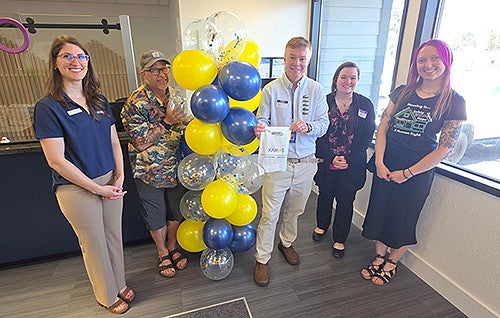
After graduation, Troffaes immediately entered the mental health field, working with children and youth in residential treatment settings. Motivated by a desire to play a larger role in young people's healing journeys, she earned a master's degree in Marriage, Couple, and Family Counseling with a specialization in serving youth experiencing severe and persistent mental illness. She later spent eight years at Lane County Behavioral Health, where she advanced from therapist to supervisor before moving into nonprofit leadership.
Throughout her career, she has remained focused on supporting youth and strengthening the professionals who serve them. One of the most meaningful reminders of that work's impact comes from a young person whose life has intersected with hers across multiple organizations over the years.
"There is a youth that I have worked with since I was an FHS intern," she said. "When I see them living independently, holding down a job, and successfully living outside the residential mental health world, it reminds me why I do this work." The young adult's success story represents the resilience Troffaes witnesses every day and serves as a powerful affirmation of her career choice.
While her professional accomplishments are significant, Troffaes is equally candid about the challenges she faced as a student. During her four years at the University of Oregon, she experienced the loss of five important people in her life. Counseling services, academic support programs, her family, and a strong sense of community helped her navigate those difficult years. "Community was such an important factor in my life throughout college," she said. "I couldn't have done it alone."
The cohort model within the Family and Human Services program became a critical source of both academic and emotional support. Troffaes credits her classmates, graduate teaching fellows, and faculty mentors with helping her persevere through rigorous coursework and demanding internships.
Among the many memories from her undergraduate years, one location on campus remains especially meaningful: a bench between the Living Learning Center and Earl Hall. "It saw happy, sunny days of community building as well as darker days crying together," she said. "It's odd to be emotionally attached to a bench, but it really was a defining location in my time at UO."
The themes of connection, support, and resilience continue to shape how Troffaes views the College of Education today. As an alumna, she values the professional network she gained through the university and the relationships that have endured long after graduation. "It means always having a built-in network and connection with my community," she said.
Now, as a program manager, she is excited to create opportunities for future generations of students. Having experienced both exceptional and difficult internships during her own education, she hopes to provide supportive training environments for emerging human services professionals.
"I am really looking forward to being able to invest in the future of FHS and COE students through offering internship experiences within my own agency," she said.
Looking ahead, Troffaes is focused on expanding access to mental health services throughout Lane County. She hopes to grow innovative programs at Kairos, including skills coaching and family support services, while continuing to pursue a long-term goal of increasing school-based health centers that provide low-barrier access to mental health and medical care.
Ultimately, her vision extends beyond her own career. "I hope that my work continues to support the education and growth of future mental health and human services workers," she said. "In that way, I can continue to support my community and the needs of our youth long after I retire."
From a college student searching for direction to a leader shaping the future of community mental health, Troffaes's story reflects the power of education, mentorship, and human connection. It is a story of resilience, purpose, and a lifelong commitment to helping young people and families not only overcome challenges but thrive.