
How donor support is helping College of Education graduates begin their careers
By Andrea Olson
June 26, 2026
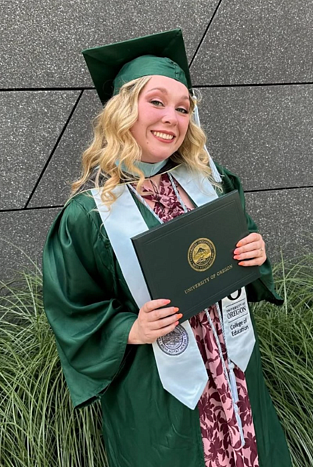
As graduation approaches, many College of Education students find themselves preparing to step into their first professional roles. Emily Westlund, '26, was no different as she prepared to join the workforce as an elementary school teacher.
After months of student teaching and nearing completion of her master’s degree in the College of Education’s UOTeach program, she was ready to step into her role as a third-grade teacher at Eugene’s Oak Hill School. Her lesson plans were taking shape, her classroom vision was clear, and the transition from graduate student to full-time teacher was finally within reach.
But before she could begin, there were still final steps to complete and final costs to cover.
Professional licensure, certification, exams, and background checks all arrived at the exact moment she was finishing her program and preparing to start her career. These are required, time-sensitive steps to enter the profession, and they must be paid out of pocket. For future teachers, these costs total at least $338. For speech language pathologists, they reach $855. For special education teachers, they climb to $830. These expenses come just as students are transitioning out of graduate school and into the workforce.
At that critical transition point, donor-funded support changed what would have been a moment of financial strain into one of focus and forward momentum.
With Emily’s commencement ceremony behind her and only a short summer before her teaching job begins, this timely support eased the financial stress that often comes with entering the profession. “It allowed me to focus my energy on preparing for my future students and classroom,” she shared. With that burden lifted, she was able to shift her attention where it mattered most, planning for her students, building her classroom, and stepping confidently into her first year of teaching.
Her experience reflects a broader reality across the College of Education. Final costs to enter the profession can determine whether graduates step directly into their roles or face delays at the very moment they are ready to serve.
For example, Bryana Baur, '26, Communication Disorders and Sciences, emphasized the financial barriers associated with entering the field of speech-language pathology, noting that required licensure and certification fees can add to the burden of existing student loan debt. Similarly, Paige Bennion, '26, Communication Disorders and Sciences, indicated that scholarship support enabled her to complete her degree and certification requirements without incurring additional financial obligations.
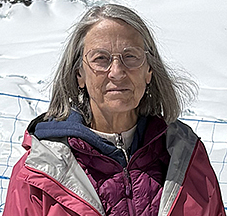
Donor perspectives further illuminate the importance of addressing these barriers. “I always knew how important scholarships were for students to start and complete degrees,” shared donor Brigid Flannery, PhD, ’92, Special Education and retired Associate Dean of the College of Education (pictured to the right). “Yet as a student and later as a faculty member, I saw how often the unplanned expenses while completing a graduate program can impact student success and stress. That is why I was excited to help support certification and exam costs.”
That understanding is reflected in the growing reach of graduation support. This year, 135 graduate students received $57,374 in graduation cost funding, removing financial barriers tied directly to licensure and certification. By verifying financial need and awarding support at the point of completion, more students are reached when it matters most.
For students, the impact is immediate and lasting. Targeted financial support at the transition from preparation to professional practice plays a critical role in facilitating workforce entry. By reducing final financial barriers, donor-funded scholarships enable graduates to move forward promptly and effectively into roles where they serve as educators, clinicians, and community professionals.
Student scholarships can make all the difference, particularly for students in need. Ten percent of COE students receive scholarships thanks to the support of our generous donors–but we can do more. With your gift, we can help all students afford college, bridge gaps in equity, and send more diverse practitioners, educators, and researchers out into the field.