
Information Session | Student Spotlight | Alumni Spotlights | Scholarships and Funding | Apply Now
About the Education Policy and Leadership (EPoL) Master’s of Science Program
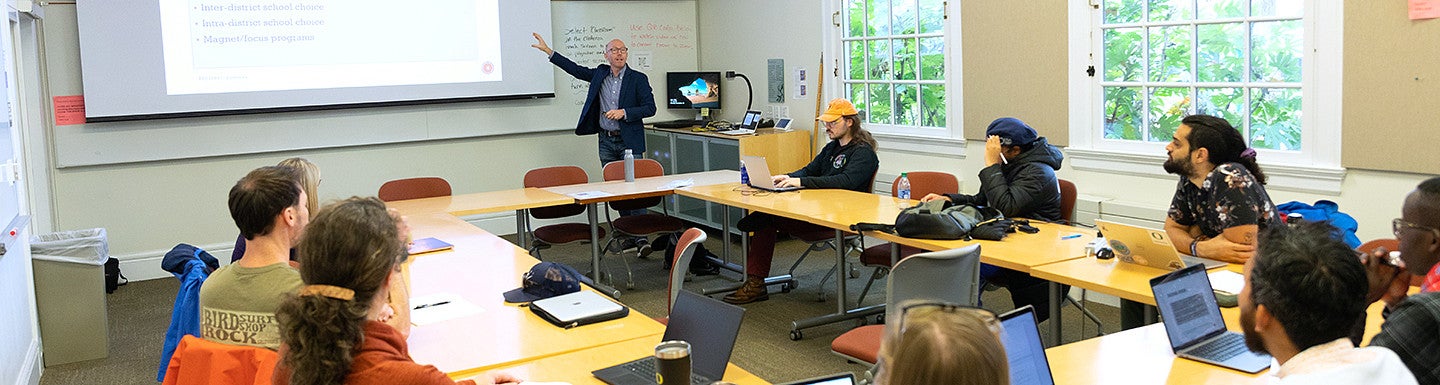
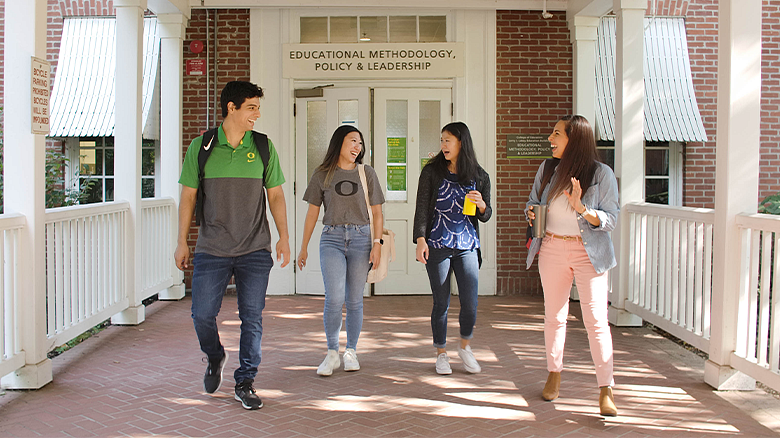
Widening gaps in educational achievement. Heightened evidence of long-lasting pandemic learning loss. Increasing politicization of public education at every level. Now is the time for an inter-disciplinary, reflective, and skill-oriented education like the kind you will find in the Education Policy and Leadership (EPoL) Master’s Program at the University of Oregon. EPoL harnesses talented individuals passionate about education, preparing them with a wide range of analytic skills, tools, and knowledge. Come join us!
Our program is a 12-month place-based program that awards you a Master of Science degree in Education Policy and Leadership (EPoL). The program combines methodological training, theoretical grounding, and practical expertise in US education policy, evidence-based decision-making, organizational leadership, and policy-making processes. If desired, EPoL students can add on an optional specialization in data science.

What can I do with this degree?
Master’s degrees are highly sought-after degrees within the public, private, and nonprofit sectors. Here are some of the kinds of jobs you will be able to tackle with confidence:
- Education data analyst in a research firm
- Education program officer in a non-profit or advocacy organization
- Policy analyst for a school district or state department of education
- Academic or student affairs dean in K-12 schools
- Social and/or community service manager
- Administrator in a college or university
- Education journalist
- Principal in public, public charter or private school (some of these roles also require an administrative license)
- System leader (e.g., assistant superintendent, associate commissioner in school district or state department of education)
- Director, founder, or program manager for private or non-profit educational organization
- School board member
If you’re considering pursuing a doctoral degree, this is a fantastic degree to prepare you for a PhD in education policy, educational leadership, political science, public policy, or another social science or quantitative methods field.
Hear from Program Director and Associate Professor Ilana Umansky in this short, informative video about EPoL!
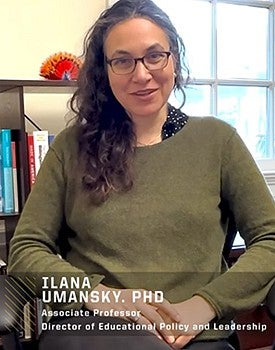
Associate Professor Ilana Umansky discusses our one-year Education Policy and Leadership (EPoL) masters program that provides rigorous theoretical, methodological, and analytic training in a supportive cohort environment on campus in Eugene, Oregon.
Information Sessions
Mark your calendars! We will be holding online and in person information sessions this fall for our January 16, 2026 priority application deadline. Info sessions will be held:
Thursday, March 19, 4:00 - 5:00 p.m. (online via Zoom)
Tuesday, April 7, Noon - 1:00 p.m. in person, Lokey Education Building 102K, UO Eugene campus (and also online via Zoom)
Clicking on the button below will open up a new browsing window where you can register for the information session of your choice. Use your browser's back button to return to this page.
EPoL Info Session Registration Form
To connect to the Education Policy and Leadership session: Download the Zoom App “Zoom Client for Meetings” (If in an open area, please remember to wear headphones/earbuds during the Zoom session). Meeting details will be emailed to you.
If you can’t make any of these sessions or you want to jump start your learning about our program, you can watch the recorded information session from last year to learn more about our program and admissions.
Clicking on the button below will open up a new browser window.
Take the Next Step
Call, email, visit us. We’re here to answer your questions. Or, if you’re ready, dive in and apply to the program!
Student Spotlight
Norma Trefren

Ch’ee-la, my name is Norma Trefren, I am enrolled member of the Confederated Tribes of Siletz Indians. I am pursuing a master’s in Education Policy and Leadership to expand my impact beyond individual student support and into systemic change.
After seven years in higher education, I have seen how institutional policies directly shape student success. Supporting students through complex processes has strengthened my commitment to equity, access, and thoughtful leadership.
I now seek the knowledge and strategic skills to influence policy, improve institutional practices, and help create educational environments where all students have the opportunity to flourish.

What Our Faculty Are Saying
"Students deepen their grounding in theory, frameworks, and methods and also push to ask critical questions about equity, evidence, and implications of and on sociopolitical contexts."
–Assistant Professor, Claire Mackevicius
The Student Experience
MS-EPoL is an in-person, four-term (12 month), cohort-based program, although candidates may opt to attend part-time, extending their study plan across two years. Program cohorts start graduate coursework in July.
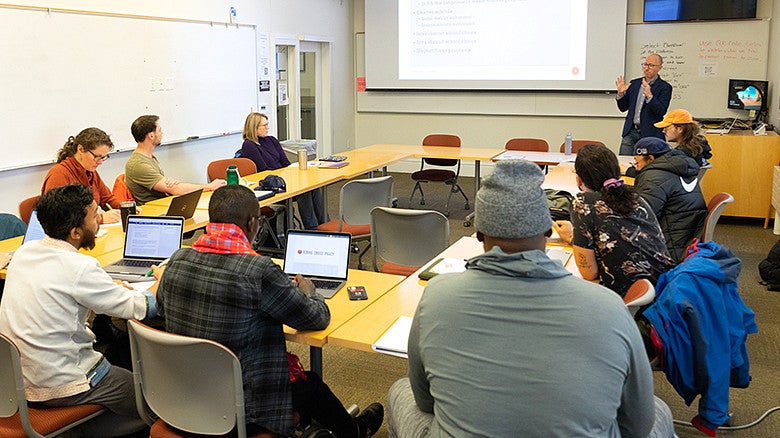
Candidates develop close relationships with peers and faculty, through sequential course work that brings together the strands of (1) research methods, (2) educational theory, (3) policy studies, and (4) leadership studies. Although the cohort takes a core strand of classes together, roughly half of each student’s classes are electives, allowing individual students to tailor their coursework to their own interests and goals.
Electives range from methodological skills like EDLD 652 Data Visualization, to substantive courses like EDLD Education Policy for Multilingual Students. Candidates are also able to take relevant courses outside of the College of Education including in the School of Planning, Public Policy, and Management, as well as departments such as Economics, Sociology, and Indigenous, Race, and Ethnic Studies.
Alumni Spotlight
Santiago Navia, '23
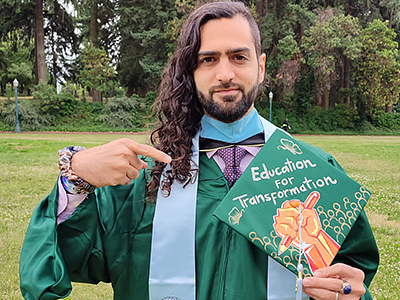
What were your career plans after you completed the program and how is it going?
Commitment to Social Justice and Systems Level Change
Faculty, students, and staff in the Education Policy and Leadership Program are committed to equity and justice in our own program and university, as well as in K-12 schools nationally. We believe in the potential of schools and school systems to create change toward racial, economic, linguistic, gender, and sexual identity justice. We also know that schools, including higher education institutions, do not live up to this potential, and too often exacerbate and perpetuate injustice and harm. We commit to the work of changing these deeply embedded patterns and structures both personally, as individuals and members of our larger communities, and professionally, as higher education leaders, researchers, advocates, and teachers.
Education Policy at the University of Oregon
Faculty and students at the University of Oregon are working at the leading edge of education policy at the local, state, and national levels. Our programs encompass both the masters (Education Policy and Leadership) and doctoral level. Learn about our doctoral program, Quantitative Research Methods in Education (QRME).
Scholarships and Funding
We provide a number of scholarship and funding opportunities in an effort to offer students support in pursuing their degrees and professional futures by removing as many barriers to those goals as possible. We use one common application that will automatically enter you into consideration for any and all scholarships for which you meet selection criteria.